Description
Gordon from Newbarns….
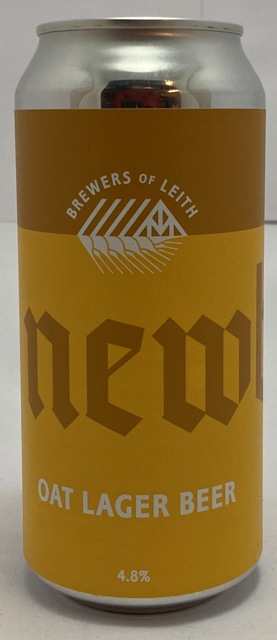
A few thoughts on our Oat Lager Beer:
The Oat Lager Beer is the most “conceptual” of the four core beers. As big fans of the Brussels brewery De La Senne (specifically Taras Boulba), we set out to make a “rustic” (not a fan of that word) lager that touched on all the things we like about their bitter, hoppy, pleasantly estery profile, but achieved in a quite different way.
We decided that we wanted to use lots of oats, local malt and UK hops. We’ve used Golden Promise from Simpson’s who supply almost all of our malt as well as Mungoswells in East Lothian and Crafty Maltster’s in Auchtermuchty who are both small, single farm maltsters. The blend of oats has come from Simpson’s and some huskless malted oats from Crisp maltings. All the hops come from Brook House hops, who we can not praise enough. They are really at the top of the UK hop scene for us, especially in their processing.
The first two batches of the OLB have been quite different. Between the four of us, Emma and I probably prefer the first batch from Burntmill and Jonny and Fred prefer the batch we brewed ourselves at Futtle, which was fermented in Leith.
The first batch was arguably too clean for our goals. Fermented quickly and cleanly with less of the Goldings and Challenger showing through, this batch was a fairly simple, crushable pilsner with a touch of oat. For the second batch, we used local single farm malt and whole leaf hops in a hop back rather than our usual whirlpool addition, swapping Goldings for Admiral. It was then fermented slower, but at a higher temperature. This resulted in a beer with much more character. Despite having all the same notes, we’ve landed somewhere more esoteric this time, between the belgian pale ales that we love and some of our favourite best bitters (it doesn’t taste the same, but I get a real Harvey’s Sussex Best vibe from this one).
Going forward, I think we’re going to aim for a happy medium between the two. Keep the oats and hops of batch two, but turn the esters down a bit and increase the drinkability back to something similar to batch one. Our first batch brewed at Jane St is now happily in tank and on it’s way there.